If you’ve inherited a shoebox of old cards, found a binder in the attic, or you’re finally ready to part with a collection you built over decades, one question keeps coming up: “How do I sell my baseball cards, and where do I even start?” It’s a fair question — the hobby has changed a lot over the years, and the fastest path to a good outcome isn’t always obvious.
This guide walks you through everything you need to know to sell your baseball card collection for a fair price, from identifying what you have to choosing the right buyer.
Start By Figuring Out What You Actually Have
Before you can sell anything, you need a clear picture of your collection. Not every card is valuable, and not every “old” card is automatically worth much. Cards printed in bulk during the late 1980s and early 1990s — a period often called the “junk wax era” — were overproduced and heavily hoarded, so most of them carry little to no resale value today.
Older cards tell a different story. Cards produced before 1980, especially those from before World War II, are the ones collectors and dealers are most interested in. This is the vintage and prewar market, and it’s driven in large part by legendary cards like the 1909 T206 Honus Wagner, which has become the benchmark “holy grail” of the hobby. Whether your cards fall into this category — and what they’re worth — depends heavily on demand for the specific players and sets, as well as the physical condition of each card.
How to Identify the Year, Brand, and Set
If your cards don’t have a printed date, you can usually work it out from the back of the card. Look for career statistics — the last season listed in the stats is typically the year before the card was printed. For example, if the stats run through 1955, the card is most likely from 1956. Many cards also include a small copyright line and manufacturer name in the fine print on the back.
A few modern tools make this process much easier than it used to be:
-
Use your phone’s camera-based search tool (like Google Lens). Snap a clear, well-lit photo of the card’s front, then the back if needed, and compare the results against listings that show the year, brand, and set name.
-
Search using specific details. Combine the player’s name with the card number and a short, unique phrase from the text on the back of the card. Distinctive phrases from career blurbs or ad copy often pinpoint the exact year and set.
-
Cross-reference with images and checklists. A general image search can help you match borders, fonts, and team logos, while searching for a specific year and set’s checklist on video platforms can confirm subsets and inserts.
-
Look for telltale markers, including the manufacturer’s name (Topps, Bowman, Fleer, Donruss, Upper Deck, Panini, and others), any subset or insert titles printed on the card, and league logos, which can also hint at the era.
Once you know the year and set, you can classify your cards by era: cards from 1945–1979 are generally considered vintage, anything before 1941 is prewar, and everything from 1980 onward is considered modern.
Identify the Stars in Your Collection
A collection’s value is closely tied to how many star players and Hall of Famers it includes. A smaller stack with a few standout names is often worth more than a much larger pile of common players — though there are exceptions for particularly rare or historically significant sets. If you’re not sure which players in your collection are considered elite, a quick search for “greatest baseball players of all time” (or the equivalent for football, basketball, or hockey, if your collection spans multiple sports) will help you spot names worth paying closer attention to.
Assess the Condition of Each Card
Once you know what you have, take an honest look at the condition of each piece. Any potential buyer will inspect your cards closely, so it pays to do the same yourself first. Common issues include:
-
Corner and edge wear
-
Creases or bends
-
Surface scratches or scuffing
-
Poor centering
-
Faded or blurry printing
-
Writing, stains, or paper loss
Keep in mind that even cards straight from an old pack aren’t necessarily flawless. Vintage and prewar cards were produced with older printing equipment, so centering problems, print defects, and miscuts were common right off the press — and those manufacturing flaws still affect value today, even though they weren’t caused by mishandling.
Once you’ve reviewed your cards, store the valuable ones properly. Individual sleeves, rigid toploaders, or plastic pages in a binder will protect them from further wear while you decide how to sell.
Understand Grading — But Don’t Rush Into It
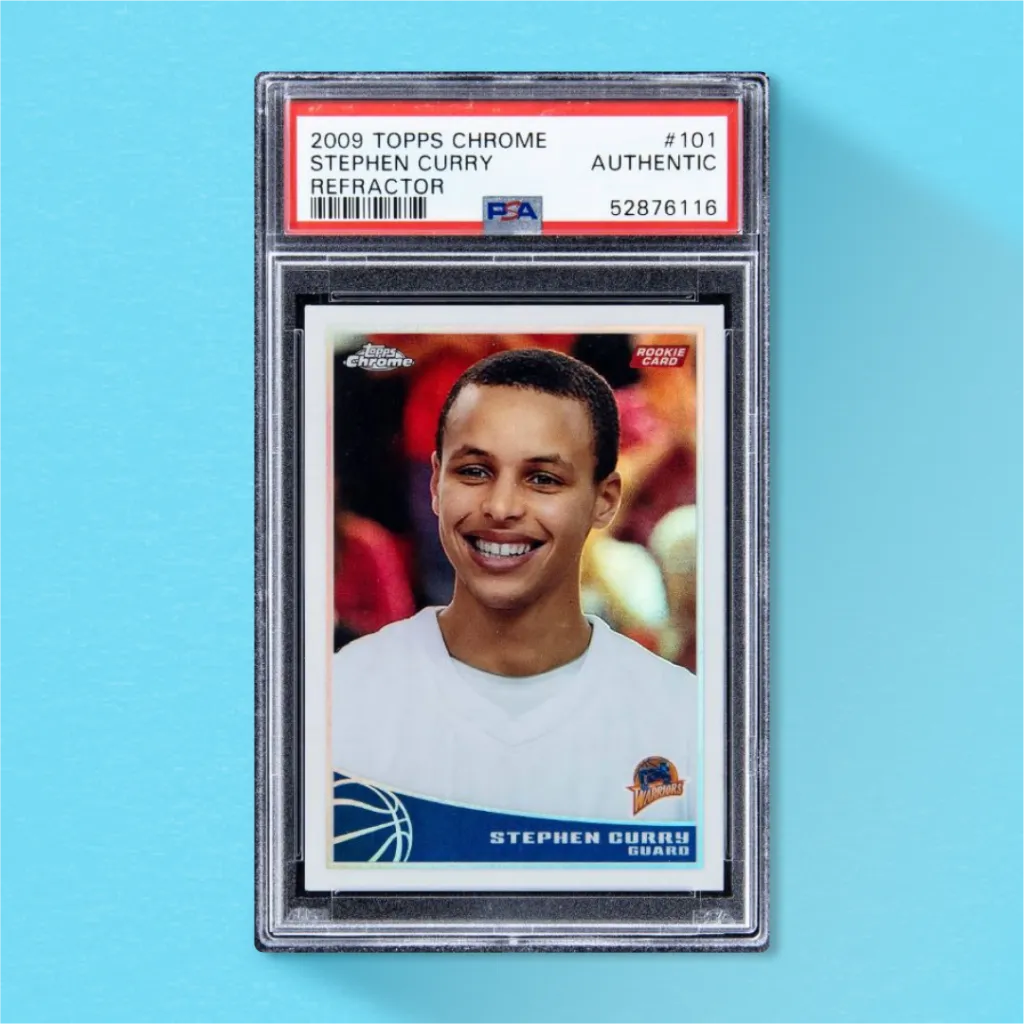
Third-party grading services authenticate cards and assign them a standardized condition score, which makes it much easier to compare your cards to recent sales of similar pieces. The major players in this space use a 10-point scale, where a higher number reflects better condition and, generally, a higher value.
Learning how grading works is useful because it helps you understand what similar cards have actually sold for. However, that doesn’t mean you should rush to get every card professionally graded. Grading involves fees, and if you add insurance and shipping costs on top of that, you can easily spend more than a card is worth — particularly for lower-value pieces. It’s often smarter to have a professional buyer evaluate your collection first and advise you on which cards, if any, are worth grading.
Check Recent Sale Prices
Before you accept any offer, it helps to have a benchmark. Search for your specific cards on a marketplace like eBay, filter for completed and sold listings (not just active ones), and note what similar cards in similar condition have actually sold for recently. This gives you a realistic sense of market value.
Keep in mind that dealer offers typically land somewhere around 60–70% of those final sale prices. That gap covers the dealer’s overhead, the time and expertise needed to resell your cards, and the fees and risk that come with marketplaces like eBay — costs you’d otherwise absorb yourself if you sold the cards individually.
Weigh Your Options for Selling
Selling it yourself on eBay gives you control over pricing, but it also means photographing, listing, packing, and shipping every card yourself, plus dealing with marketplace and payment processing fees. It can work well if you have the time and experience, but it’s a heavy lift for a large collection.
Selling through Craigslist or Facebook Marketplace limits you to local buyers and comes with the usual risks of meeting strangers and negotiating in person. You may also end up accepting a lower price simply because your pool of potential buyers is small.
Selling to a specialized dealer is usually the fastest and most straightforward route, especially for larger or higher-value collections. Local card shops have become far less common than they once were, so many collectors now work with established national dealers who have the resources and customer base to offer competitive prices — particularly for vintage and prewar material.
What Buyers Typically Look For
Reputable buyers determine value using recent auction results, completed marketplace sales, and published price guides. Generally, dealers are most interested in:
-
Pre-1980 sports and non-sports cards
-
Large collections, especially complete or near-complete sets
-
Cards featuring stars and Hall of Famers
-
High-grade examples, even of common players
-
Notable vintage issues, such as early tobacco-era cards, key postwar sets, and prewar gum and candy card sets
Many dealers also buy related collectibles, including autographs, vintage photographs, and game-used memorabilia, so it’s worth asking if you have items beyond cards.
Getting Ready to Sell
Once you’ve identified your cards, assessed their condition, and gotten a sense of recent market prices, you’re in a strong position to sell with confidence — whether that means listing pieces yourself or getting a cash offer from a trusted dealer. A little homework upfront goes a long way toward making sure you get fair value for a collection you may have spent years building.